
The Post-Menopausal Ovary Is NOT Dead: How It Reinvents Itself As An Immune Powerhouse
The beginning of this year has brought exciting, groundbreaking findings for women’s health, and more specifically, postmenopausal women. And while the human data is currently a preprint, the foundational mouse study is already peer-reviewed and published - making this research robust enough to turn thought-to-be solid facts around and open a whole new area for further research.
Especially in a field that has been neglected for far too long - enter women’s health.

The Traditional View
Historically, our understanding of the ovary has been tied strictly to its reproductive capabilities. It was defined by the “ovarian reserve” - a fixed number of follicles that dictate a woman's fertility. With the depletion of this reserve, women enter menopause, typically around the age of 50.
Below are a few points on how the postmenopausal ovary has traditionally been defined:
Reduced organ volume: A decrease in physical size following the halt of ovulation.
Follicle depletion: An exhaustion of functional oocytes (eggs).
Fibrosis: An accumulation of hardened connective tissue driven by the expansion of specialized cells called fibroblasts.
Senescent cells: Cells that have permanently lost the ability to divide.
Hormonal quiescence: Cells transitioned into a state retaining minimal hormonal secretion.
The Busted Myth
Traditionally, the narrative of ovarian biology has been that once the final follicle was spent and the ovary entered a menopausal state, it became biologically useless and dispensable. This paradigm characterized the organ as an “empty shell” - a mere remnant of its former reproductive self, made up of senescent cells and fibrotic tissue.
One of the many reasons why this organ is understudied stems from the difficulty of obtaining “normal,” healthy human tissue, as ovaries are usually only removed due to severe pathology.
However, recent data forces us to view the organ not as a silent relic, but as one transitioning into a potentially new function.
An Unexpected Finding Leading to an Open Question
Originally, the research team only aimed to map senescent cells in functional human ovaries, as these non-dividing cells are suspected of driving aging symptoms as they accumulate in various tissues. Because it was not feasible to obtain healthy ovaries from young people, they relied on ovaries removed for other medical issues from postmenopausal women aged 50 to 75.
Interestingly, while examining these ovaries, the researchers noticed that the cells were actively producing different proteins as the women aged. This went completely against expectations: if the organ was truly “useless and dispensable,” there shouldn’t have been dynamic changes across the different age stages.
This led the researchers to investigate further. They set out to answer a new question:
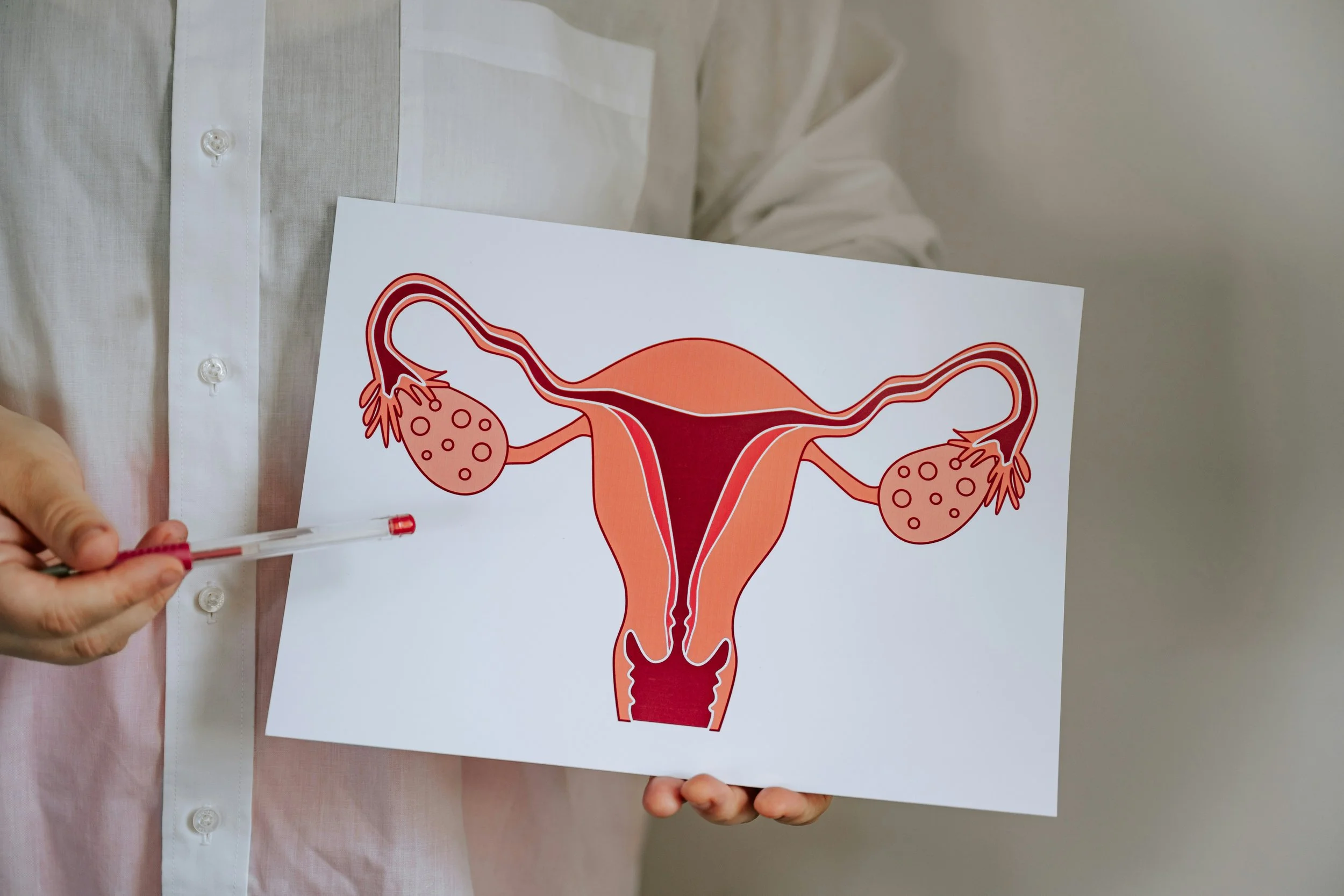
Is the post-reproductive ovary truly silent, or does it remain biologically active?
How Did They Approach The Question?
One goal was to map the molecular and cellular remodeling that occurs post-menopause and determine if the organ transitions from a reproductive role to one with a different biological purpose.
They studied mice at different ages - 2 months (young), 18 months (reproductively old), and 24 months (post-reproductive). The post-reproductive stage was defined as the “oopause,” marking the permanent discontinuation of ovulation. One ovary was subjected to bulk RNA sequencing to identify the activation level of different genes, while the other was used for histological analysis. By thinly slicing and staining the tissue, they could visually map exactly where and how the ovary’s physical structure was changing, ensuring the genetic makeup and physical structure perfectly aligned.
The Findings That Change How We View Post-Menopausal Ovaries
By assessing factors such as the infiltration of immune cells and structural remodeling, the core discovery was that the post-reproductive ovary undergoes a massive molecular reprogramming, transitioning into an “immune-like” organ.
While the normal aging process does involve senescent cells secreting pro-inflammatory signals, the shift in the ovary goes far beyond that. The immune infiltration is massive and organized enough that the aged ovary essentially undergoes an identity transformation, turning into a hub packed with immune cells. This is not just normal background “inflammaging,” but an active transition into a functional immune powerhouse.
Limitations of this Study
As always, there are drawbacks that must be acknowledged. With a method such as bulk RNA sequencing, the level of gene activation can be determined, but not the exact cellular origin of those genes. Thus, it is unclear whether the non-immune cells of the post-reproductive ovary are actively transforming to produce these signals, or if the organ is simply acting as a new "reservoir" for invading immune cells.
Furthermore, while the mouse “oopause” can mimic follicle depletion and is a valuable model, it lacks the sharp drop in estrogen levels that is a key characteristic of human menopause.
New Findings Leading To New Hypotheses
Having an organ that suddenly acts as a massive collector of pro-inflammatory signals is likely to have a significant impact on whole-body health. If this organ does not just serve as a sink but as an active source, these pro-inflammatory signals might contribute to the overall increase in systemic inflammation during aging.
This could provide a possible biological explanation for why women, despite having longer lifespans, often experience more years of poor health than men.
How A Study Without Definite Answers Can Impact the Future of Research
By realizing that the post-menopausal ovary is not just “dead,” but might actually acquire new functionalities - whether it drives this process itself or simply serves as a distributor - this research has opened up a whole new world ripe for discovery.
Understanding this “immune powerhouse” is potentially essential for improving the healthspan of women, who spend up to half their lives navigating the postmenopausal state.
Converse, A., Dipali, S. S., Schowe, I. P., Kelly, E. B., Jambunathan, S. S., Ocañas, S. R., Stout, M. B., Pritchard, M. T., & Duncan, F. E. "The post-reproductive ovary shifts from a reproductive to an immune-like organ." Molecular Human Reproduction, Volume 32, Issue 2, gaag038 (2026). https://doi.org/10.1093/molehr/gaag038.
Watson, M. A., Soygur, B., King, C. D., Devrukhkar, P. R., Shanes, E. D., Melov, S., Pavone, M. E. G., Duncan, F. E., & Schilling, B. "The human ovary exhibits dynamic molecular remodeling in the decades post-menopause." https://doi.org/10.64898/2026.03.26.714635 (Preprint).
Backman, I. "After menopause, ovaries may transform into organs with immune powers." Science Magazine.