
5 Things I Would Do In My First Week As A Life-Science PhD Student
Starting a PhD is exciting. But what should you actually do in your first week? It’s not like there’s a blueprint for how to do your PhD. You might have so many things you want to do that you don’t know where to start - or there’s nothing to do yet, and you’ve got the same problem. Both are very common.
Looking back at my experience, and seeing what others did or didn’t, I summarized the few points I would focus on if it were my first week in doctoral studies.
Let’s get into it.
Read Reviews About Your Research Field
This is the best way to gain an overview of the important topics, the history, and where the field is right now. Make sure the reviews are from a well-established journal, and pick ones from different ages - an old one (like 20 years ago), a middle one (like 10 years), and a new one.
This gives you a good timeline of what has happened, what were key findings, and which theories were proven wrong. It also helps you get to know the key players in the field (take a closer look at the cited studies). You can put together a collection of the research papers that are cited across the reviews; they’re likely a key study you should know about.
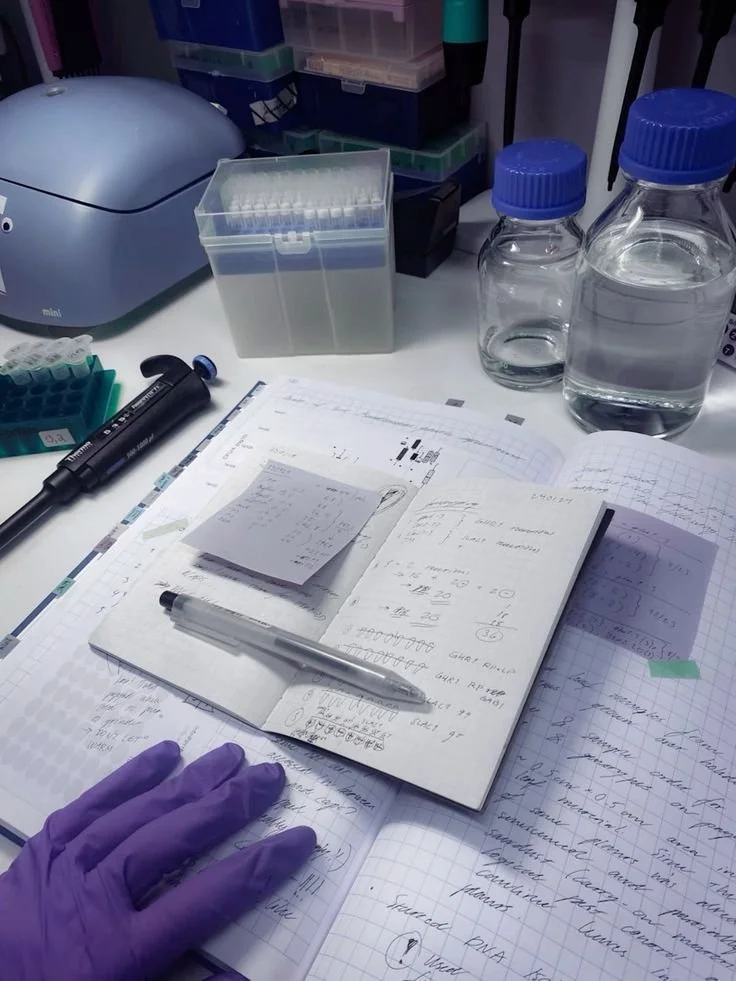
Interview Your Work Colleagues
It’s good to be aware of what projects are running in the lab and who is carrying them out. It also helps you “evaluate” your work colleagues - who is helpful and who you might prefer to avoid. If you ever need help, you know who you should ask.
Get Clear on Your Organizing System
This one is not to be underestimated. It is key that you know where you have what, how you keep notes, and how you keep your experiment files.
Get a good folder structure and naming strategy(there will be a post about this soon).
Do you keep your notes digitally or physically? What are the rules in the lab?
How do you store samples - where are the ones in a running experiment, and where are the ones that are used but might be reused later?
For sample storage, I recommend setting up some sort of table, where you have a sheet for each storage unit you’ve got. Number your boxes and record it in that sheet, including what’s in it, so you never have to search through your storage. This is a common issue, and so much time gets lost this way.
If you want an organizing system already set up, check out my Notion Template here.

Use a Reference Manager
From the beginning, make sure you have set up a reference manager. Is there a requirement in your lab? If not, I highly recommend Zotero.
Install all extensions to your web browser and your word processor. Then, whenever you have something to read, put it and read it directly in there. You can also take notes in there and export them as a document.
Make the Scope of Your Project Visible
You likely already have an idea about your PhD project, or you will have to write a proposal soon. Either way, make sure you save it somewhere you always have it handy.
Print it out and put it on your desk, or hang it on your whiteboard.
Or save a copy in the Notion template on the front page.
It is too easy to lose sight of the big picture when you’re in the middle of experiments, troubleshooting, or having new ideas. Go back to it regularly to make sure you’re still on track. Update it whenever necessary.
This also helps whenever you have to talk about your project or present it in some way. You always can check that whatever you present is aligning with the big picture.
This is it. The exact things I would do in my first week of my PhD. It will not only give you a head start but also make you more efficient throughout your whole PhD.
Which of these points resonated with you?