
4 Underrated Daily Habits of Successful Life Science PhD Students
Being a PhD student in life sciences is, to say the least, busy.
Sometimes we spend the whole day sitting in front of the computer until our brains are smoking. Other days, we are basically just running around the lab. It is no wonder the stereotype of the mad scientist exists. Between juggling different experiments, routine cleaning duties, and lab meeting presentations, it is easy to lose sight of the big picture. It is incredibly easy to get lost in the details and forget what actually advances your PhD.
Fortunately, there are certain daily habits you can implement - or practice most days - to ensure you are always moving in the right direction: forward.
1. Read daily (and block time instead of counting papers)
When I started my doctoral studies, my supervisor recommended reading at least two papers a day. At the beginning, this can feel completely overwhelming. You simply are not that fast at reading yet, and routine lab tasks take up a lot of time just because they are new.
Nevertheless, daily reading IS a key habit. While everyone universally agrees it is important, it is usually one of the first habits PhD students ditch because it does not seem directly related to immediate project progress.
However, reading benefits you immensely in the long term. It helps you understand different ways to design experiments, how to tackle troubleshooting, how to communicate scientifically, and how to spot both good and bad research approaches. Crucially, it expands your knowledge far beyond what you learn inside your immediate lab environment.
To make sure you actually stick to daily reading, try these two steps:
Pick a dedicated daily time: For me, this was in the morning at home. My supervisor did not micromanage and did not care where I did the work, as long as it got done. Frankly, my concentration on heavy text was best at home with a fresh mind.
Set a time goal instead of a paper count: Instead of aiming for a specific number of papers, I preferred to block out exactly one hour and read as much as I could. If you pick a massive review paper, it will take you much longer than a short report. Plus, if a paper is highly relevant to your work, you want the freedom to dig deep into the details without feeling guilty that you didn't finish a second one.
2. Plan ahead for ultimate efficiency
Keep your planner up to date with tasks you have completed, postponed, or newly assigned. Make it a strict habit to review your daily plan either the evening before or first thing in the morning.
Without a visual plan, it is incredibly easy to get lost in the workflow and lose track of time. We all know those "quick" tasks, like changing media for your cells, that secretly pile up. Unfortunately, even for researchers, the day only has 24 hours. We absolutely cannot neglect rest - after all, our brains need to function at the highest capacity during work hours to ensure our best work is done.
I personally preferred to go over my daily plan every morning, double-check that my priorities were still correct, and then head to the lab with a clear roadmap. During the day, whatever new tasks popped up, I would note them down and update my planner either on the go or in the evening. This roadmap ensures you never lose track of what needs to be done and keeps you from feeling like that chaotic "mad scientist."
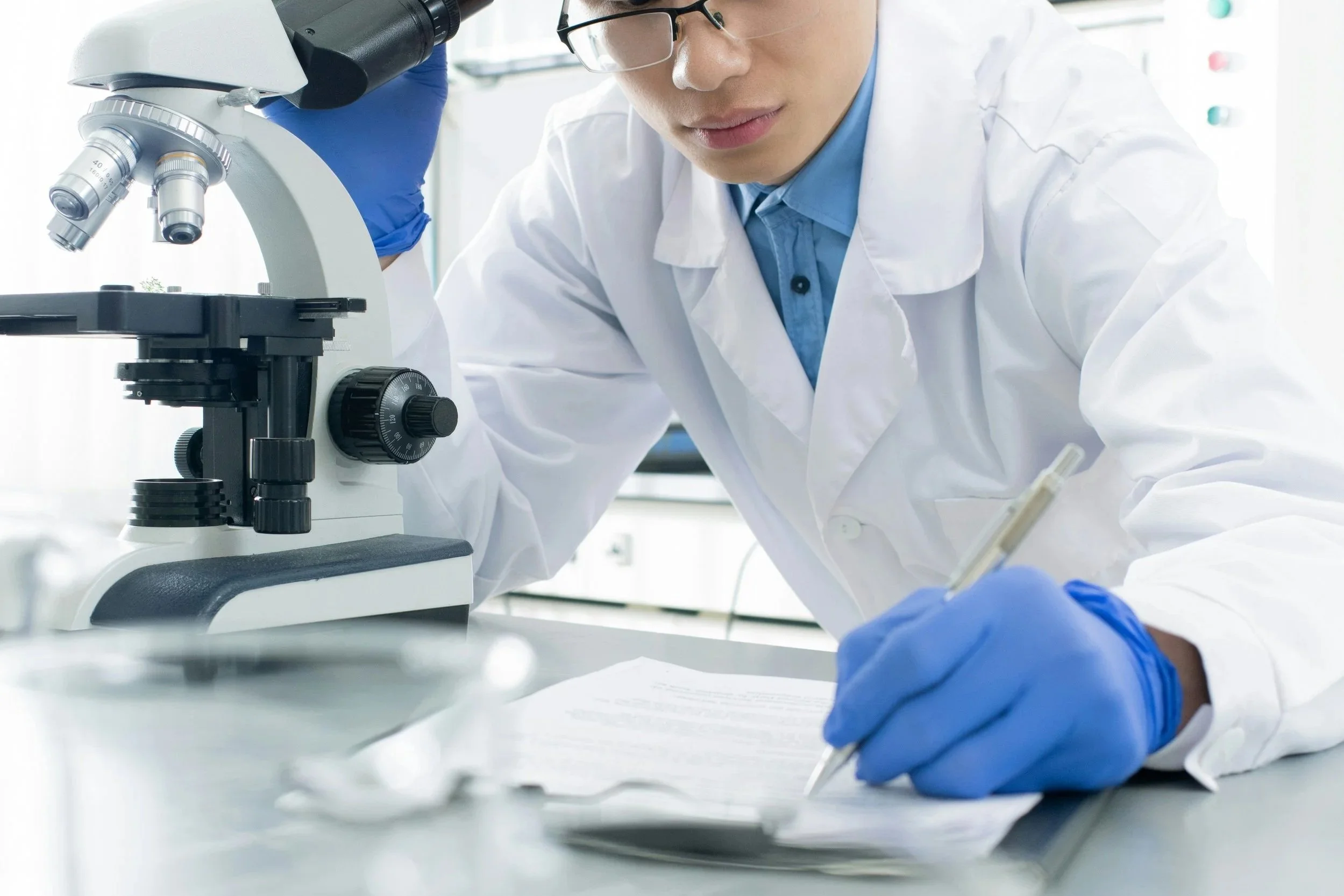
3. Update your lab journal on the go
Yes, I know. Many students dread this step because at the end of a long day, you just want to wrap up your work and leave. But almost everyone eventually regrets not taking their lab journal seriously - it is basically the bible of your entire project. You might think you will remember the exact details later, but let's be honest, you won't.
While it is best to update your lab journal on the go, you should also make it a habit to block out an hour at the end of the day to finalize both your planner and your journal.
The secret here is to make the process enjoyable. Your lab might have strict compliance rules on where you must store your data, but within those rules, pick a system that you actually enjoy using, whether it is physical or digital.
I designed a custom system where everything was connected: projects had subpages for experiments, each with their own tasks linked directly to a calendar. Because everything was backlinked, it was completely trackable. For my brain, the aesthetics had to be pleasing and the system highly functional to save me work in the long term.
To anchor the habit, pair it with a reward. Just like I enjoyed my morning matcha latte while reading, I did my evening lab journaling with a hot cup of tea and a row of dark chocolate.
Do you believe me now that the lab journaling session can be fun?
4. Analyze new data ASAP
We get so focused on physically running experiments that it is tempting to let raw data just sit in a folder, unanalyzed. Honestly? That is a waste of your hard work and unnecessarily halts your progress.
The longer you wait, the higher the chance you will forget the specific nuances of the experiment, its immediate implications for your project, or the creative ideas you had for data visualization.
Even if an experiment did not work out the way you hoped, you will still learn something from it. Maybe it failed, and you learn how to approach the process differently next time. Or maybe you discover an unexpected, accidental insight. Either way, it will impact your next steps, so delaying the analysis only slows you down. Allocate a dedicated block of time for data analysis in your daily planning session and treat it as a non-negotiable task.
Of course, this list is not the ultimate, one-size-fits-all truth, and you can absolutely expand it based on your individual needs. But these are the specific habits I found to be massively underrated and extremely important for truly thriving in a PhD program long-term.
These tasks easily fall off the daily to-do list because they lack immediate, screaming urgency. But when you look at the bigger picture, they deserve your highest attention.
What about you? Do you have other daily habits you swear by to keep your lab life on track?